
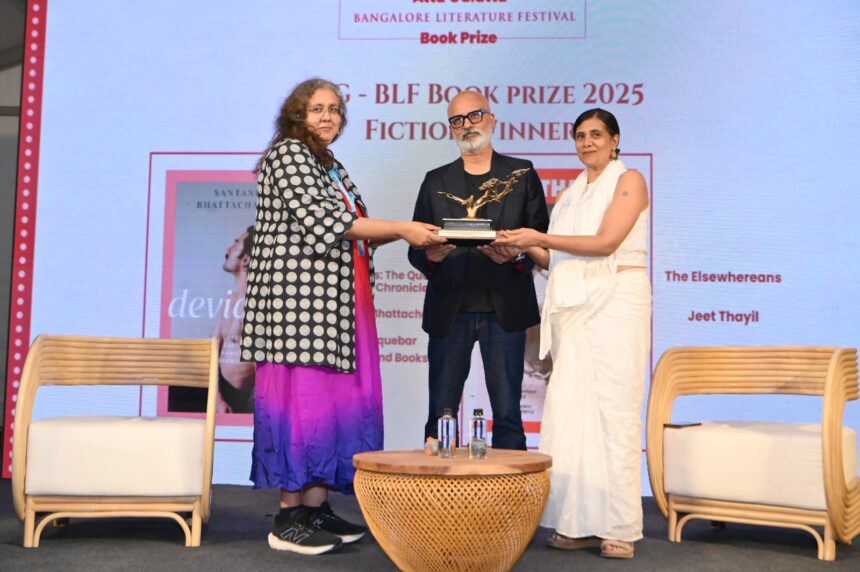
Atta Galatta – Bangalore Literature Festival Book Prize is probably the only major literary prize that considers translations, short-story anthologies, and self-published works. The awards are distributed across eight categories, and the winners are chosen by a jury that remains anonymous to the shortlisted authors.
Here is the full list of winners, along with the notes from the jury on what made the blood, sweat, and ink of these authors shine brighter than the rest.
Winner of the Best Children’s Picture Book Story
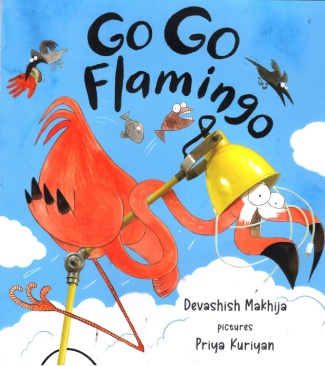
Devashish Makhija for Go Go Flamingo
Jury’s note: A joyous celebration of movement, color, and courage. With vibrant illustrations and playful, musical language, this irresistible read-aloud invites children to laugh, dance, and dream. With Devashish Makhija’s brilliant verse soaked in satire, he and his illustrator paint a telling picture of the violence unthinking humans inflict on the natural world through hazardous waste.
Winner of the Best Children’s Picture Book Illustration
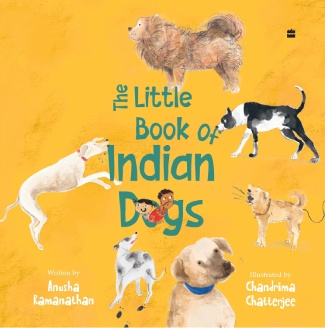
Chandrima Chatterjee for The Little Book of Indian Dogs
Jury’s note: What is love? Several would agree it is nothing but a pair of endearing eyes at one end…and a wagging tail at the other 🙂
Chandrima Chatterjee has tugged at our heartstrings with The Little Book of Indian Dogs, a beautiful book that celebrates native dog breeds.
Her illustrations are wonderfully descriptive of the personality of each of the dogs, giving children the space to discover the temperament of the Chippiparai, the Rampur Greyhound, the Jonangi, and more, than simply to know what each of them looks like with their height, weight, or other pedantic details.
All dogs are special, but congratulations to Chandrima, on making native Indian dogs more special than others with your book!
Winner of the Best Book in Children’s Fiction
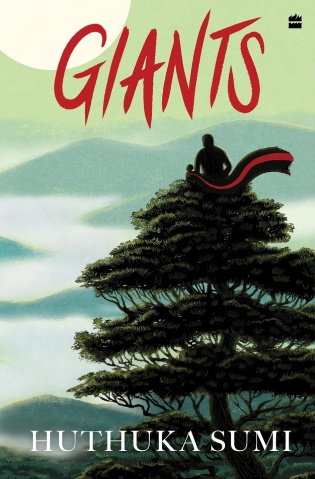
Huthuka Sumi for Giants
Jury’s note: Huthuka Sumi. With his debut book, Giants, this storyteller transports us into an unbelievably beautiful world where, strangely, everything is believable. His Kene, his Kato’s vocal abilities, and his storytelling prowess, trees that speak to those who care to listen — all become a part of you, and you, of them.
He brings to us the unique folklore of the Sumi Nagas, their culture, traditions, and language, as we navigate the life of Kato, a young boy who cannot speak.
A wonderful and refreshingly new voice—congratulations to Huthuka Sumi!
Winner of the Best Book in Children’s Non-fiction
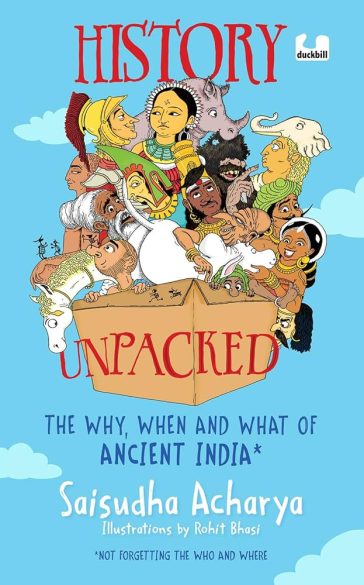
Saisudha Acharya for History Unpacked: The Why, When and What of Ancient India*
Jury’s note: What would happen if historic books began to offer tips on how to survive the Stone Age? Or decided to juxtapose historical happenings across the world and make comparative notes?
For starters, we would have more children engage with our past. Importantly, history would leave the pages of our books and come alive before us.
Saisudha Acharya does just that with her outstanding work of documenting the happenings of ancient India. It’s interactive, hilarious, and packed with facts.
Congratulations to Saisudha for magically achieving what every history teacher and parent would like to—get their children excited about history!
Winner of the Best Cover Design
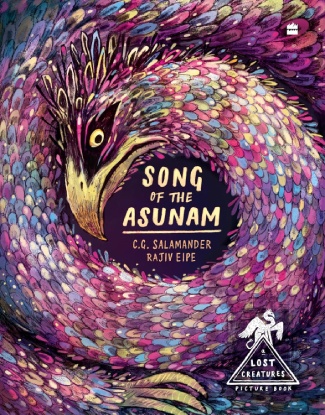
Cover Design by Rajiv Eipe for Song of Asunam
Jury’s note: Rajiv Eipe’s cover for ‘Song of the Asunam’ is instantly arresting and also characteristic of his beloved style. The circular composition of the creature draws the eye to the center, where the curious title is located. The dark patch of feathers inside which the open eye of the creature is painted is so striking! The multi-coloured, dazzling feathers are fresh and magical, much like the book and the illustrations inside. The cover almost seems to be a scene in motion – a memorable visual treat!
The only award tonight that has not been selected by a Jury process is the award for Popular Choice. This winner was picked on the basis of an online voting campaign and was an easy winner by a large margin.
Winner of the Best Popular Choice Book
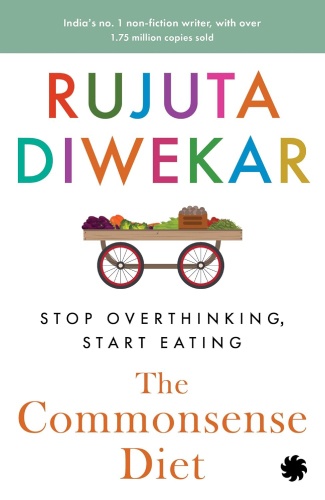
Rujuta Diwekar for The Commonsense Diet: Stop Overthinking, Start Eating
Jury’s note: They say food is the way to anyone’s heart. But what happens when you restrict yourself to a strict diet? Author-nutritionist Rujuta explores exactly that: how to stop overthinking and start eating.
Winner of the Best Non-fiction Book
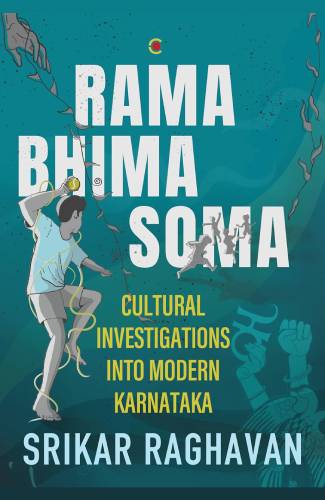
Srikar Raghavan for Rama Bhima Soma: Cultural Investigations into Modern Karnataka
Jury’s note: If there was a new way to chronicle the history of a geography, this is it. The author’s scholarly eye details the multicultural, intellectual, and political mosaic of Karnataka, and takes the reader through an immersive experience that they can go back to again and again, learn from, laugh over, wonder about, and think of deeply. This is a book that reinvents chronicling, and does so with great finesse.
The book’s ethical clarity never simplifies its mysteries: faith, violence, tenderness, and form braid into a story that is both archive and arrival. For its lyrical daring, critical intelligence, and deep stewardship of Kannada literature, this work stands as an outstanding achievement.
Winner of the Best Fiction Book
This year, it’s a tie between two books: Deviants and The Elsewhereans
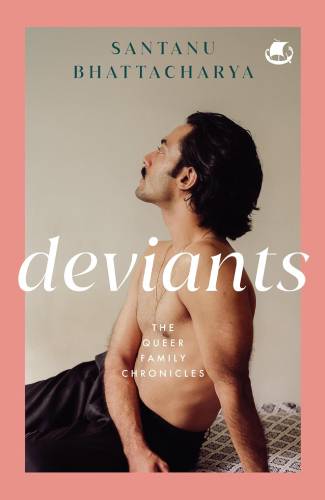
Santanu Bhattacharya for Deviants: The Queer Family Chronicles
Jury’s note: Deviants is a courageous, deeply compassionate novel that examines the still thorny issue of same sex love. The narrative lays bare the fault lines of society through the eyes of its young protagonists – three men, born in different eras, who struggle to make sense of a world indifferent, if not downright cruel, to their very human longing to make a connection.
Portraying queer desire with subtlety, sensuality, and nuance, Bhattacharya shows how same sex love influences destinies just as surely as violence or ambition. The novel is remarkable for its moral clarity, its sympathetic depiction of gay love, and its quiet insistence that this love, too, deserves dignity and recognition. For this jury, Deviants stands out as a powerful work of contemporary fiction—unsettling, but ultimately enlarging our sense of what it means to be human.
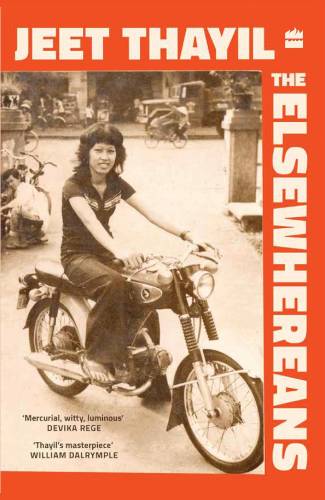
Jeet Thayil for The Elsewhereans
Jury’s note: The Elsewhereans is an audacious experiment in the novel form. A restless boundary-crossing work where displacement is the setting, mood, and theme, duly rendered in the language of longing and grief. The voice shifts effortlessly from lyricism to razor-sharp observation to dark humour. The novel maps the contours of identity, belonging, and otherness. In doing so, it crosses the rims of countries, cultures, and memory, thus speaking directly to all of us caught in the flux of a rapidly transforming world.
The jury honours this work for its originality and emotional depth. The Elsewhereans is a story whose time is, indeed, nowhere else but here – and now.
Maynk
I also write here.