
The second day of the festival opened with a warm and lively session led by author and illustrator Archana Sreenivasan, who brought her picture book Indian Food from A to Z (India on a Plate) to life for a young audience. Before she began reading, she asked the children about their breakfast. Their answers ranged from scrambled eggs to dosa with sambar, poha, puri, sabudana and even dosas with chicken gravy. It set the tone for a session rooted in familiarity, comfort, and memories.
Archana explained that the idea behind the book was simple: an alphabet is familiar to every child, but using it to introduce Indian food opens a door to culture and geography in a friendly way. She said the book includes dishes from many regions, reminding children that India’s food map is as rich as its language map.
When she began reading from A to Z, she paused often, inviting reactions and stories. Her light humour (especially when she warned that reading about food might cause hunger) kept the children engaged. “A for achaari” led to an enthusiastic discussion about grandmothers making pickles. One child even described how the whole house smells different during pickle season. “B for biryani” drew excited murmurs, showing how strongly food connects to memory. “C for chappati” opened a conversation about daily meals and who rolls the softest chappatis at home.
The illustrations played a major role in the session. The picture of pani puri received instant cheers, proving its universal appeal among children. Mishthi doi brought in stories of relatives from Bengal and festivals where sweets are shared. A child proudly declared naan as his favourite food. “I for idiyappam” drew delight, especially from children who recognised it from home. “G for gulab jamun” gained another wave of approval. When Archana reached “K for kheer”, she described the comforting combination of kheer with rice and ghee. She also spoke briefly about “kubaani ka meetha”, helping children understand how traditional desserts vary across regions.
The session shifted from reading to reflection when Archana asked, “Who makes the best food in your home?” Without hesitation, children said “mother”, “grandmother” and “father”, each with a story that hinted at routine, care and affection. This simple question opened up a deeper thought — that for children, food is inseparable from the person who prepares it.
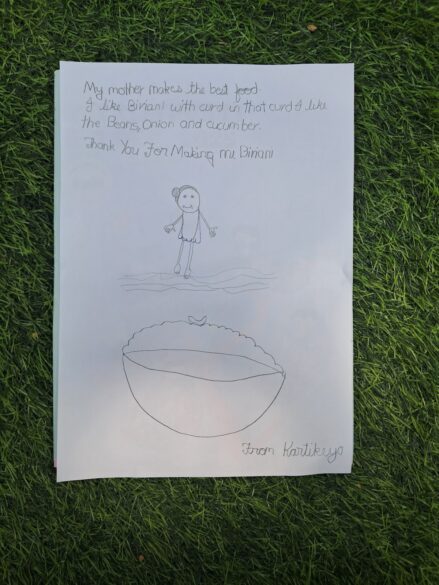
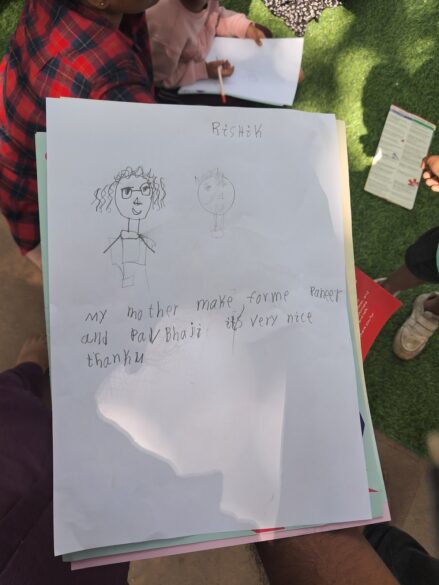
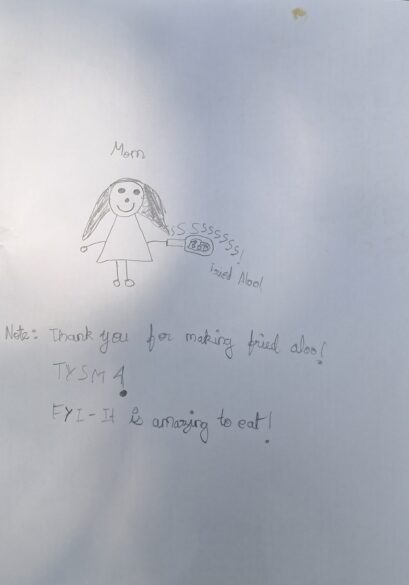
Archana then introduced a drawing activity. Each child was invited to sketch the person who cooks their favourite dish and write a note of thanks. The drawings were earnest and expressive: bowls of biryani, plates of rasam with rice, pav bhaji, fried potatoes and even combinations unique to each home. Some thanked their mothers for biryani layered with beans and cucumber, while others wrote heartfelt notes to fathers who cook rasam. The gratitude in their lines was clear, showing how food becomes a language of love long before children learn to articulate that idea.

The session was simple in structure but rich in its outcome. It showed how children understand food not through recipes, but through relationships. It also reflected how picture books can gently introduce culture without overwhelming young readers. Archana’s approach kept the focus on curiosity, conversation and connection — three elements that often define a child’s earliest memories of food.
In the end, the session stood as a reminder that food is not only nourishment. It is a thread that ties families together, a source of comfort and a bridge between generations.
Dr Chhavi Gandhi
Dr. Chhavi Gandhi is a doctor turned author who documents books, culture and everyday stories. She writes about how literature shapes community life and personal identity. Her work blends clarity with warmth, grounded observation and a deep appreciation for storytelling.